
Chemical Safety Training
Chemical safety training for the people who actually touch the chemicals. Safe handling, storage, labelling and emergency response for hazardous chemicals at your site.
Also known in Malay as: pengendalian bahan kimia
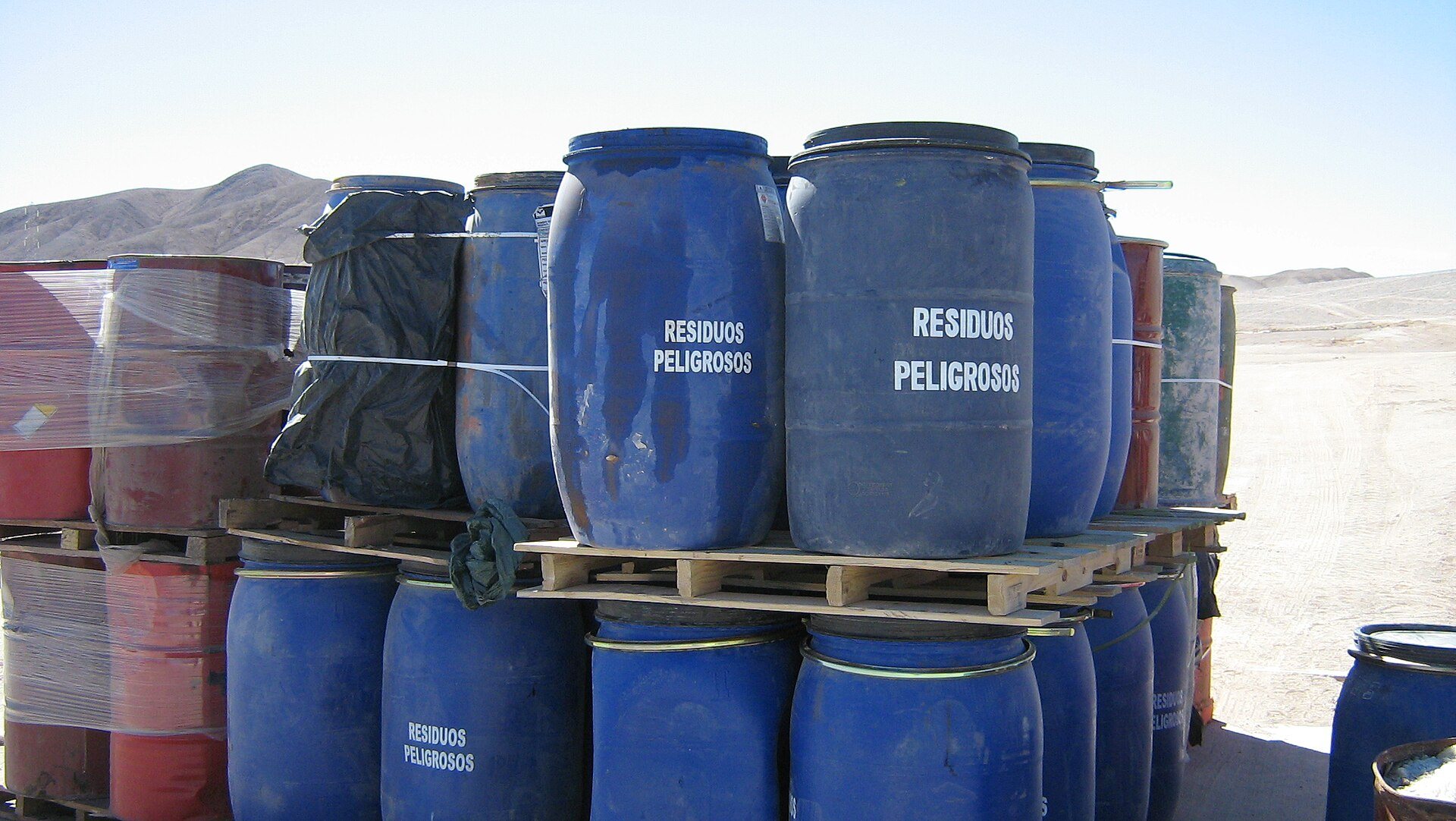
An employer shall ensure that all chemicals hazardous to health supplied or purchased by him and used in the place of work are labelled and that the labels are not removed, defaced, modified or altered.
OSH (USECHH) Regulations 2000 reg 20(1) · Official PDF ↗ · accessed 5 Oct 2026
In any place of work where a chemical hazardous to health is used, the current Chemical Safety Data Sheet for that chemical or a copy thereof shall be kept in a conspicuous place close to each location where that chemical is used, and shall be easily accessible to the employees.
OSH (USECHH) Regulations 2000 reg 25 · Official PDF ↗ · accessed 5 Oct 2026
An employer who undertakes work which may expose or is likely to expose his employees to chemicals hazardous to health shall provide the employees with such information, instruction and training as may be necessary to enable them to know – (a) the risk to health created by such exposure; and (b) the precautions which should be taken.
OSH (USECHH) Regulations 2000 reg 22(1) · Official PDF ↗ · accessed 5 Oct 2026
Pembekal hendaklah melabelkan tiap-tiap bungkusan bahan kimia berbahaya dengan jelas dan tidak boleh dipadam yang mengandungi maklumat yang berikut: (a) pengecam produk; (b) pengenalan pembekal; (c) kata isyarat; (d) pernyataan bahaya; (e) piktogram bahaya; dan (f) pernyataan berjaga-jaga.
Unofficial English summary: suppliers must clearly label every package of a hazardous chemical with the product identifier, supplier details, signal word, hazard statement, hazard pictogram and precautionary statement.
OSH (CLASS) Regulations 2013 reg 8(1) · Official PDF ↗ · accessed 5 Oct 2026
Who it's for
When you need it
- Your chemical register shows gaps. If you can't name every chemical on site and its hazards, your team needs training.
- CHRA findings say handlers need training. A Chemical Health Risk Assessment often flags that the people who touch the chemicals haven't been trained.
- USECHH reg 22(1) requires it. "An employer who undertakes work which may expose or is likely to expose his employees to chemicals hazardous to health shall provide the employees with such information, instruction and training as may be necessary."
- New chemical introduced on site. Every new substance means new hazards, new SDS sheets, and new PPE requirements.
What your team walks away with
- Identify and classify chemical hazards using GHS pictograms and hazard statements
- Interpret and apply Safety Data Sheets (SDS) to everyday chemical handling tasks
- Implement safe chemical storage, segregation, and labelling practices
- Execute spill containment, clean-up, and emergency response procedures confidently
How it runs at your site
You send headcount and dates
WhatsApp your site location, number of workers and preferred dates.
We train on your chemicals
We tailor the session to the chemicals your team actually handles, using your SDS sheets and storage layouts.
Records and certificates
We hand over attendance records and certificates of attendance for your files.
Syllabus
View the full module list
- Chemical hazard classification and pictogram recognition
Understand GHS classifications and interpret hazard pictograms for safe chemical identification. - Reading and applying Safety Data Sheets (SDS)
Learn to extract critical information from SDS documents and apply them in real workplace scenarios. - Proper handling, storage, and segregation techniques
Master safe chemical handling procedures and correct storage segregation to prevent incompatible reactions. - Chemical labelling and inventory requirements
Ensure compliance with chemical labelling standards and maintain accurate chemical inventory records. - Personal Protective Equipment selection for chemical tasks
Select appropriate PPE based on chemical hazards and exposure routes identified in risk assessments. - Spill containment, clean-up, and emergency response
Respond effectively to chemical spills with proper containment, clean-up, and emergency protocols. - Practical chemical risk assessment exercise
Apply learned concepts through hands-on chemical risk assessment exercises tailored to workplace scenarios.
Related Programmes
Frequently Asked Questions
What topics are covered in Chemical Safety training?
Who should attend Chemical Safety training?
How long is the Chemical Safety course?
Can Chemical Safety training be claimed under HRD Corp?
Can the training be customised for our specific chemicals?
How many participants per session?
Is chemical handling training required by law?
Related Services
Get Chemical Safety Training on Site
We train at your site across Malaysia, tailored to the chemicals your team actually handles.
We come to you
In-house training for company groups, in person at your premises, anywhere in Malaysia.
- Hours: 9am to 5pm for each training day.
- Included: slide handouts and a certificate of attendance for each participant who completes the course.
- You provide: a training room, a projector and light refreshments.
- HRD Corp: claimable, subject to HRD Corp terms and conditions.
- Dates: set to suit you, subject to HRD Corp grant approval if you claim.
- Who we train: company and organisation groups. We don't run classes for individuals.