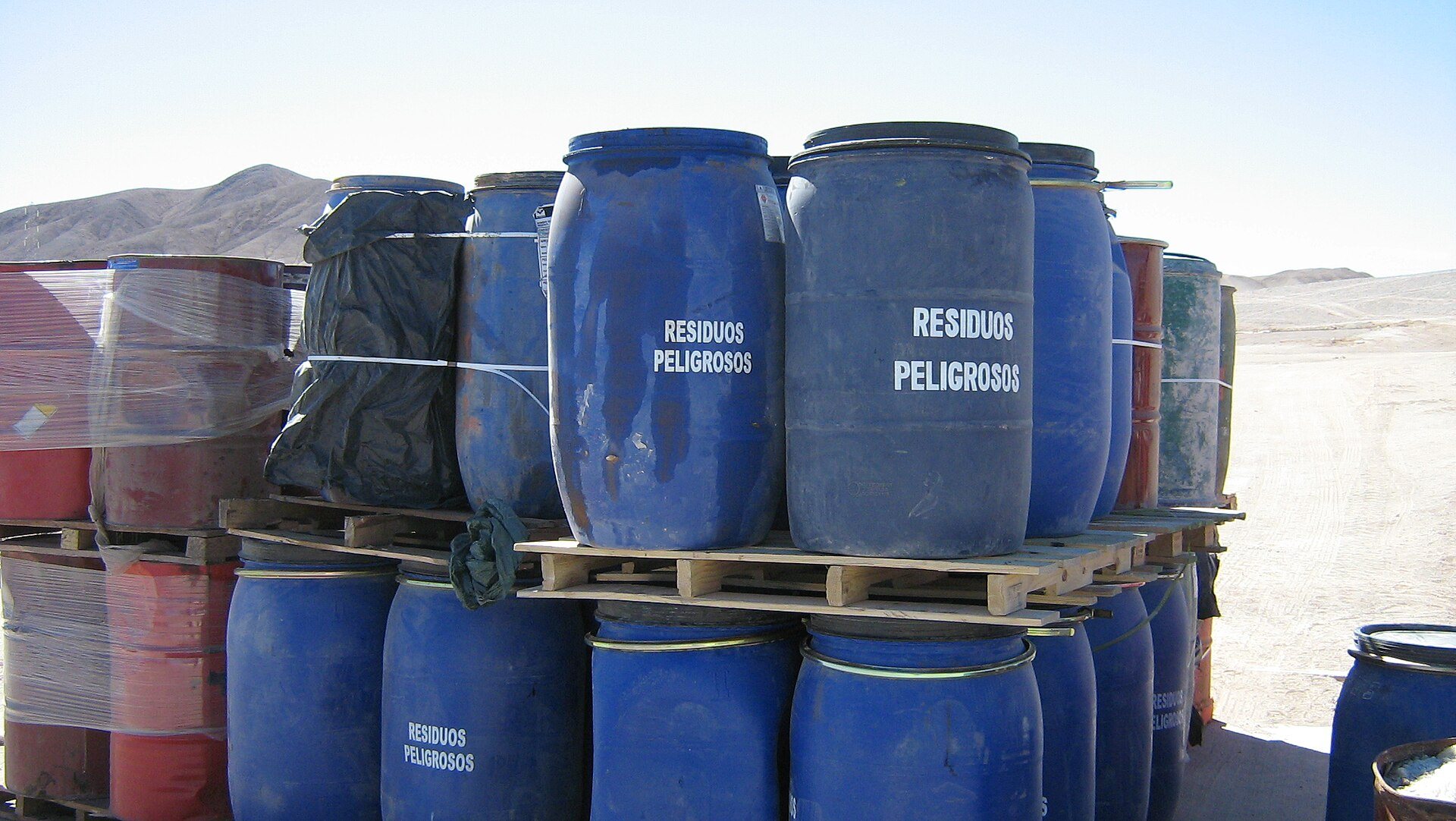
USECHH Non-Compliance Penalties
Non-compliance with USECHH 2000 carries penalties under the OSH Act. Assessment reports must be kept for at least 30 years and made available to DOSH (reg 13); DOSH may direct a review at any time (reg 10(c)).
DOSH Mandatory
Get your team CHRA-ready. We coordinate the registered assessor.
Also known in Malay as: penilaian risiko bahan kimia (CHRA)
Also known in Malay as: pengendalian bahan kimia
An employer shall not carry out any work which may expose or is likely to expose any employee to any chemical hazardous to health unless he has made a written assessment of the risks created by the chemical to the health of the employee.
OSH (USECHH) Regulations 2000 reg 9(1) · Official PDF ↗ · accessed 5 Oct 2026
Any engineering control equipment provided pursuant to subparagraph 15(1)(f) shall be - (a) inspected at an appropriate intervals by the employer, each interval being no longer than one month; and (b) examined and tested for its effectiveness by a hygiene technician at appropriate intervals, each interval being no longer than twelve months.
OSH (USECHH) Regulations 2000 reg 17(1) · Official PDF ↗ · accessed 5 Oct 2026
Pembekal hendaklah melabelkan tiap-tiap bungkusan bahan kimia berbahaya dengan jelas dan tidak boleh dipadam yang mengandungi maklumat yang berikut: (a) pengecam produk; (b) pengenalan pembekal; (c) kata isyarat; (d) pernyataan bahaya; (e) piktogram bahaya; dan (f) pernyataan berjaga-jaga.
Unofficial English summary: suppliers must clearly label every package of a hazardous chemical with the product identifier, supplier details, signal word, hazard statement, hazard pictogram and precautionary statement.
OSH (CLASS) Regulations 2013 reg 8(1) · Official PDF ↗ · accessed 5 Oct 2026
Any work that may expose employees to a chemical hazardous to health needs a written chemical health risk assessment (CHRA) first, by a DOSH-registered assessor. Many facilities have never completed a proper CHRA, or their assessment is outdated and will not survive a DOSH inspection.
Non-compliance with USECHH 2000 carries penalties under the OSH Act. Assessment reports must be kept for at least 30 years and made available to DOSH (reg 13); DOSH may direct a review at any time (reg 10(c)).
Accidents involving uncontrolled chemical exposure can trigger criminal liability for employers. Directors can be held personally accountable for inadequate controls.
Insurance underwriters increasingly require current CHRA reports for renewal. Tender submissions for government contracts often mandate USECHH compliance proof.
Important: A Chemical Health Risk Assessment (CHRA) must be conducted by a DOSH-registered Chemical Health Risk Assessor. Naja Safety provides awareness training, workplace preparation, documentation support, and coordination to help you engage registered assessors efficiently and comply with USECHH 2000 requirements. We do not perform statutory CHRA assessments directly.
We train your team to catalog chemicals on site, cross-reference against the USECHH First Schedule, and identify exposure pathways in preparation for assessor review.
We coordinate with registered DOSH assessors for calibrated air sampling and dosimetry. Results are compared with the permissible exposure limits in USECHH 2000 (regs 6–7, Schedule I). ACGIH TLVs are used as a supplementary, non-statutory reference.
We help you compile hazard severity evaluations, exposure frequency data, and existing controls into a format ready for registered assessor review and DOSH submission.
Training on engineering controls (LEV), administrative controls (shift rotation, SOPs), and PPE selection aligned to residual risk levels identified by the registered assessor.
90-day follow-up support to verify control implementation, conduct worker training, and prepare documentation for DOSH inspection readiness.
CHRA awareness training, workplace preparation, and assessor coordination support across Malaysia.
CHRA awareness training, workplace preparation, documentation support, and registered assessor coordination for chemical facilities across Malaysia.